
A 60% read rate feels great in a screenshot and still loses money. ROI on WhatsApp is not “how many blue ticks.” It is incremental revenue and saved cost versus Meta conversation charges + tool + labour, after you account for quality risk.
This guide gives a practical measurement model and shows which numbers to pull from Pyngdesk campaigns and operations.
Start with a formula finance will accept
WhatsApp ROI ≈(Attributed revenue + quantified cost savings − WhatsApp variable costs − platform fees − labour) / (WhatsApp variable costs + platform fees + labour)
You do not need perfect attribution on day one. You need honest ranges and consistent definitions.
Revenue attribution options (pick one and stick to it)
- Last-click chat — Orders that close in the WhatsApp thread within N days of a campaign
- Promo code — Unique code only in WhatsApp template
- UTM on links — If templates include tracked URLs to your site
- Segment lift — Compare purchase rate of messaged vs holdout (best when volume allows)
Cost savings to count
- Fewer “where is my order?” tickets after utility updates
- Faster collections when invoices go via WhatsApp
- Reduced cart recovery cost vs paid ads (when measured fairly)
Funnel metrics that actually matter
| Metric | What it tells you | Healthy habit |
|---|---|---|
| Sent | Meta accepted the message | Watch sudden drops |
| Delivered | Reached the device | Investigate high failures (list hygiene) |
| Read | Opened notification/thread | Benchmark by industry; not a goal alone |
| Replied | Conversation started | Strong intent signal |
| Converted | Order / booking / payment | Define explicitly |
| Blocked / STOP | Harm | Pause if spiking |
| Failed | Technical/policy issues | Fix before scaling |
In Pyngdesk, open a campaign’s analytics / overview for sent, delivered, read, and failed. Use retarget buckets carefully for non-delivered or non-read — do not punish people who already engaged.
Quality is part of ROI
A campaign that makes ₹50,000 this week but pushes quality to Red can destroy next month’s messaging limit. Include a risk cost:
- Hours spent remediating restrictions
- Lost ability to send during peak season
- Brand damage from spam complaints
If quality drops after a send, that campaign’s true ROI may be negative even if attribution looks fine.
Monitor quality on WhatsApp setup (/whatsapp/onboarding).
Segment-level ROI beats account-level averages
Measure by audience:
promo-opt-inVIP vs broadcustomer- City cohorts
- Utility vs marketing templates
A small VIP segment with high conversion can outperform a cheap mass blast that burns trust. Build audiences in Campaigns with tags and filters; name campaigns with the segment for reporting clarity.
A simple weekly scorecard
- Campaigns sent (count) and total delivered
- Reply rate
- Attributed orders / payments
- Variable Meta costs (from Meta billing)
- Block/STOP incidents
- Quality rating (end of week)
- Support minutes spent on campaign replies
Review in 30 minutes every Monday. Kill losers; scale winners gradually.
Using Pyngdesk in the measurement loop
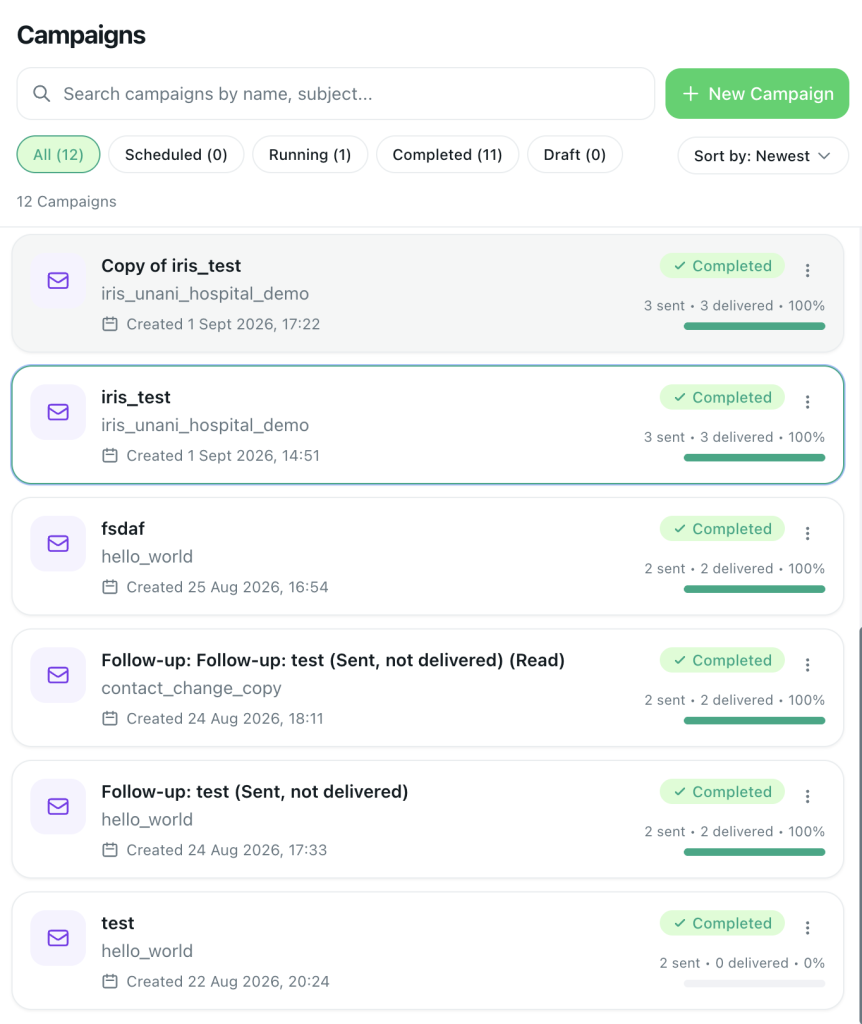
- Run campaigns from Campaigns (
/campaigns) with clear names. - Capture delivery analytics per campaign.
- Tag converters in Contacts (
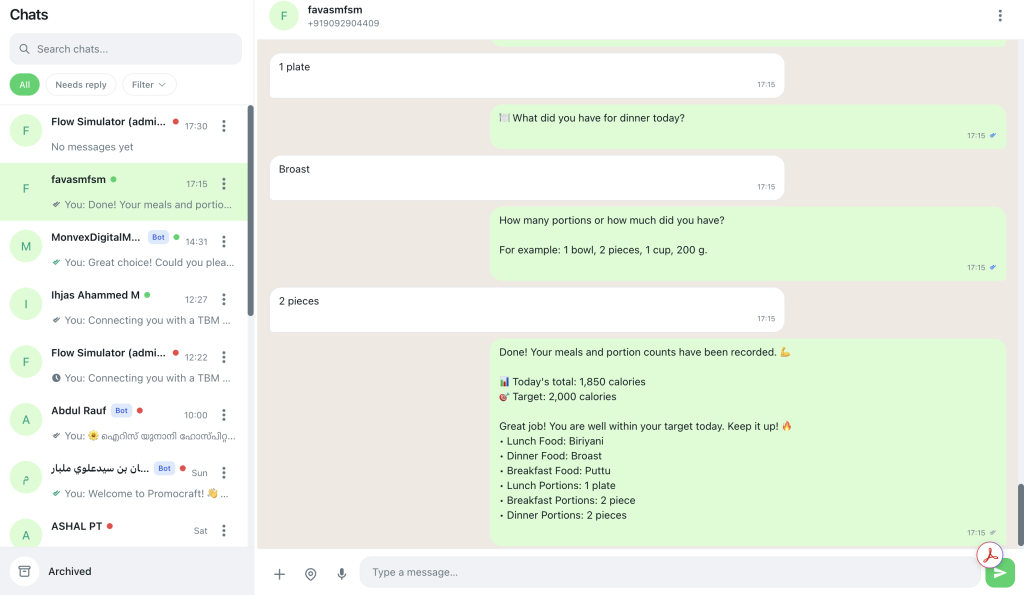
/contacts) (purchased-from-wa-april). - Continue revenue conversations in Chats.
- Compare templates in Templates — which creatives earn replies without blocks.
- Check plan usage under Organisation → Billing (
/organization/billing) so platform quotas are visible beside Meta costs.
Common measurement mistakes
- Counting reads as success
- Ignoring labour time on replies
- Attributing every later purchase to one WhatsApp ping
- Mixing utility and marketing in one ROI bucket
- Scaling volume 10× after one good test
ROI checklist
- Conversion event defined (order, booking, payment)
- Attribution method documented
- Campaign naming includes segment + date
- Delivery analytics reviewed within 48 hours
- Quality rating checked after marketing sends
- Costs include Meta + tool + labour
- Holdout or promo code used for bigger spends
Frequently Asked Questions
What is a good WhatsApp read rate?
It varies widely. Use your own baselines by template type. Optimise for replies and revenue, not reads alone.
How soon should I judge a campaign?
Utility: hours to a day. Marketing: give a defined attribution window (e.g. 3–7 days) then close the books.
Can Pyngdesk show Meta rupee costs?
Meta conversation pricing lives in Meta’s billing. Pyngdesk shows product usage and campaign engagement — combine both for full ROI.

Leave a Reply
You must be logged in to post a comment.